Bill Bruford Interview (King Crimson, Yes, Genesis): Jazz Alchemy, Drumming Burnout & Wise Advice
Few drummers have shaped modern music quite like Bill Bruford. From redefining progressive rock with Yes and King Crimson, to carving out a fiercely independent path in jazz and improvisation, Bruford’s career is a masterclass in musical curiosity, discipline, and self-awareness.
I was really nervous waiting for Bill to join the video call - I'd seen so many videos of him over the years and have listened to so many hours of his playing, it was surreal to think I'd be talking to him. But once we got chatting the nerves faded away - he was a very humble, down-to-earth and learned person and it was a real pleasure speaking with him.
You can watch the full interview here or enjoy some written highlights below.
Independence Is Not Just a Technical Skill
When drummers talk about independence, it is usually framed in technical terms. Limb coordination, polyrhythms, the ability to play contrasting ideas simultaneously. But for Bruford, independence has always meant something broader.
Early in his career, he became aware of the danger of simply fulfilling expectations, of becoming the drummer you are supposed to be. Instead, he gravitated toward musical situations that demanded decision-making, restraint, and personality. Whether that was playing around complex harmonic material or resisting the urge to overplay, independence became about choice, not just facility.
Technique gives you options. Taste determines which option you take.
Taste Is the Real Separator
One of Bruford’s recurring themes is taste, a word that does not get enough airtime in drumming education.
He speaks openly about the temptation to play more than is necessary, especially when you have the chops to do so. Maturity, he suggests, is learning when not to play. It is understanding the emotional function of the drums within a piece of music, rather than viewing the instrument as a vehicle for constant expression.
This idea feels especially pointed in an era where social media rewards speed, density, and spectacle. Bruford’s perspective is a reminder that impact often comes from subtraction, not addition.
A great drummer is not the one who can do the most. It is the one who knows what the music actually needs.
The Courage to Change Direction
Perhaps the most striking aspect of Bruford’s career is his willingness to walk away from success. At multiple points, he left hugely successful bands to pursue music that was less commercial, less comfortable, and far more uncertain. From the outside, these decisions might seem baffling. From Bruford’s perspective, they were essential.
He speaks candidly about boredom as a creative warning sign. When the learning curve flattens, curiosity fades. Rather than coasting, he chose to reset, even if it meant starting again in unfamiliar musical territory.
For drummers today, this is a powerful reminder that career growth does not always mean upward momentum. Sometimes it means sideways movement. Sometimes it means stepping back to move forward.
Practising Is About Clarity, Not Perfection
Bruford also touches on practice, not as a quest for flawlessness, but as a process of refinement. Rather than obsessing over endless repetition, he frames practice as a way to clarify intention. What are you trying to say. Why does this part exist. How does it relate to the rest of the band.
This approach reframes technical work as musical problem-solving, not mechanical exercise. Rudiments, timekeeping, and coordination all matter, but only insofar as they serve expression.
It is a useful corrective to the idea that better drumming is simply a matter of doing more reps. Without musical context, effort can quickly turn into noise.
The Drummer’s Role Is Still Underrated
Despite decades of evolution in music, Bruford notes that the drummer’s role is still widely misunderstood, often reduced to timekeeping or volume.
Yet the drummer shapes feel, direction, and emotional contour in ways that are difficult to quantify but instantly recognisable. A subtle shift in placement, dynamics, or tone can alter an entire performance.
Bruford’s career is proof that drums can be both structural and expressive, intellectual and physical. The challenge for drummers is to embrace that responsibility without ego, serving the music while still asserting identity.
Knowing When to Stop Is a Skill
One of the most refreshing moments in the conversation is Bruford’s discussion of retirement. Rather than clinging to relevance or attempting to outplay younger musicians, he chose to step away on his own terms. Not because he could not play anymore, but because he felt he had said what he needed to say.
That level of self-awareness is rare, and it speaks to a deeper philosophy. Music is something you participate in, not something you own.
For many drummers, the idea of stopping feels uncomfortable, even frightening. Bruford reframes it as a natural conclusion, a final act of taste.
What Modern Drummers Can Take From This
You do not need to play progressive rock, jazz, or complex time signatures to learn from Bill Bruford. The real lessons here are about intentionality.
Develop technique, but do not worship it.
Value taste as highly as speed.
Seek challenge, not comfort.
Let curiosity guide your choices.
Remember that less can often say more.
In a world full of noise, restraint is a statement. Bruford’s career reminds us that drumming is not just about what you play. It is about why you play it, when you play it, and just as importantly, when you do not.

A final note
If you want to explore ideas like these in more depth, Drum Dog hosts lessons and conversations with world-class drummers who have shaped their sound through intention, taste, and musical decision-making.
Take your time, follow your curiosity, and find the lessons that speak to you.
You can start your 30 day free trial at Drum Dog to see if we're a good fit for your drumming needs!

Still Stuck Behind the Kit?
If your doubles are sloppy, your grooves feel rigid, or your ghost notes get lost in the mix — it’s not your fault. You’ve been trying to fix the wrong things.
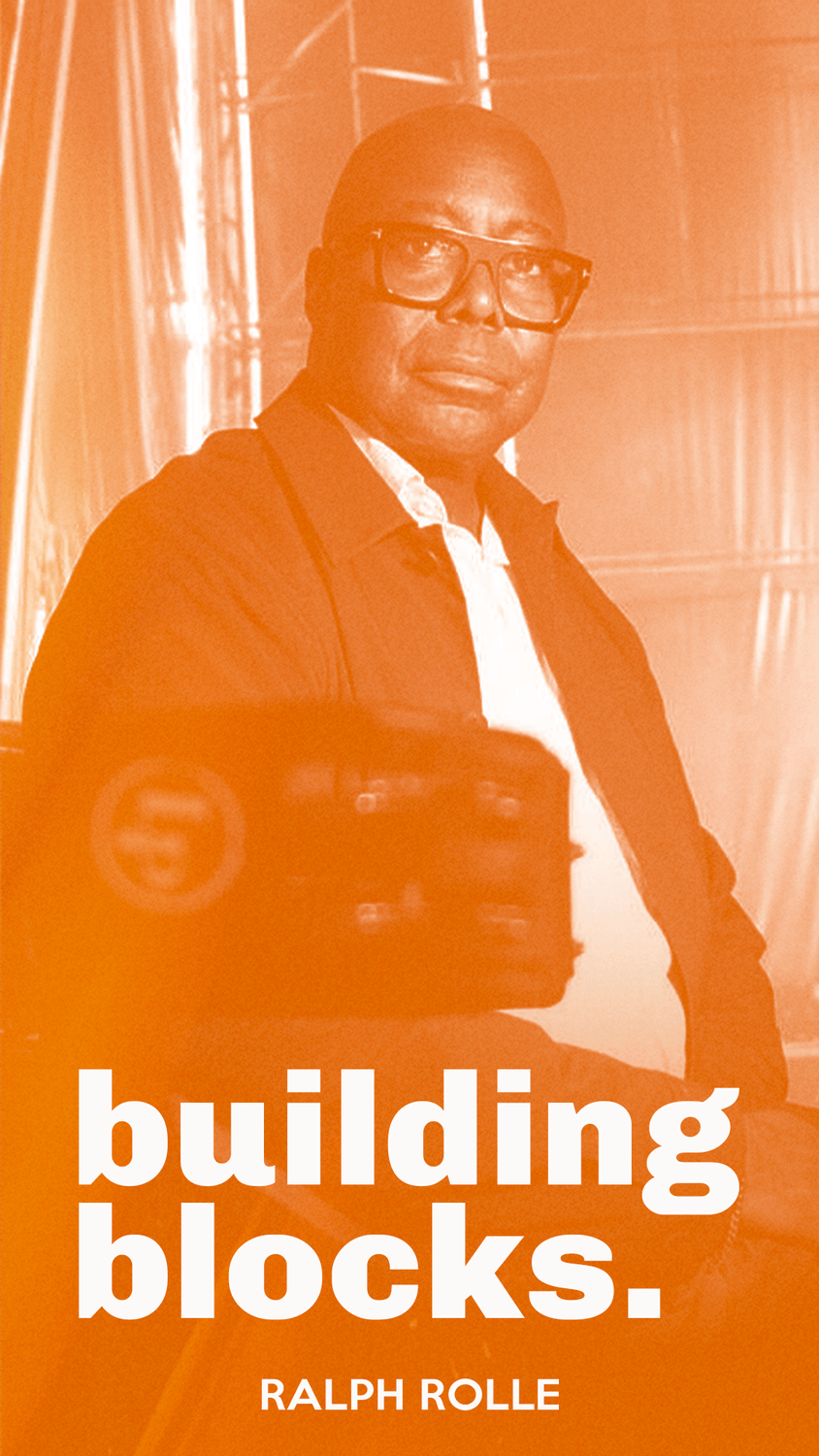
🎧 Ralph Rolle (drummer for Nile Rodgers & Chic) reveals the exact lessons most drummers skip… but every pro nails.
In just 8 crystal-clear videos, Ralph cuts through the fluff and gives you the breakthroughs YouTube never could.
Doubles that feel right
Grooves with flow
Ghost notes that hit
Bonus: Shuffle, hip-hop feel & clinic jam
Here’s the kicker:
You’ll feel better behind the kit — and your band will hear the difference. All for less than a pair of sticks.
“Turns out I wasn’t missing one trick. I was missing Ralph.” – @sticktwister

STAY IN THE LOOP