Antonio Sánchez (Pat Metheny, Birdman, Chick Corea) Live Interview: Jazz Improv, The Studio, Birdman
Interviewing Antonio Sánchez was a real thrill for me. I’d comfortably place him in my personal top ten favourite drummers and his music has been part of my life for a long time. As a university student, I actually wrote one of my final-year essays about how his drum-led score for Birdman played a key role in shaping the narrative and the film-watching experience. Since then I’ve followed his work closely, from his solo records to the incredible music he’s made with Pat Metheny and countless other collaborators.
So sitting down with him at the UK Drum Show felt slightly surreal and an immense pleasure.
From Birdman to the Screen
In many ways, Sánchez’s career in film scoring traces directly back to the impact of Birdman. The film’s unique, drum-centric soundtrack helped redefine what a movie score could be and it opened the door to a wave of opportunities.
As Sánchez explained, nearly every scoring project he’s worked on since has grown out of that moment. After Birdman, one project quickly led to another. Documentaries, TV series, and new collaborations.
One recent example is his work on the Apple TV+ series The Studio. Interestingly, the connection came about because the show’s creators, Seth Rogen and Evan Goldberg, had been using the Birdman soundtrack as temporary music while developing the show. Eventually Sánchez got the call.
During their first meeting, the conversation centred around whether he could expand beyond drums. While Birdman showcased his rhythmic voice, the creators wanted reassurance he could also write orchestral and harmonic music. For Sánchez, that was an exciting challenge.
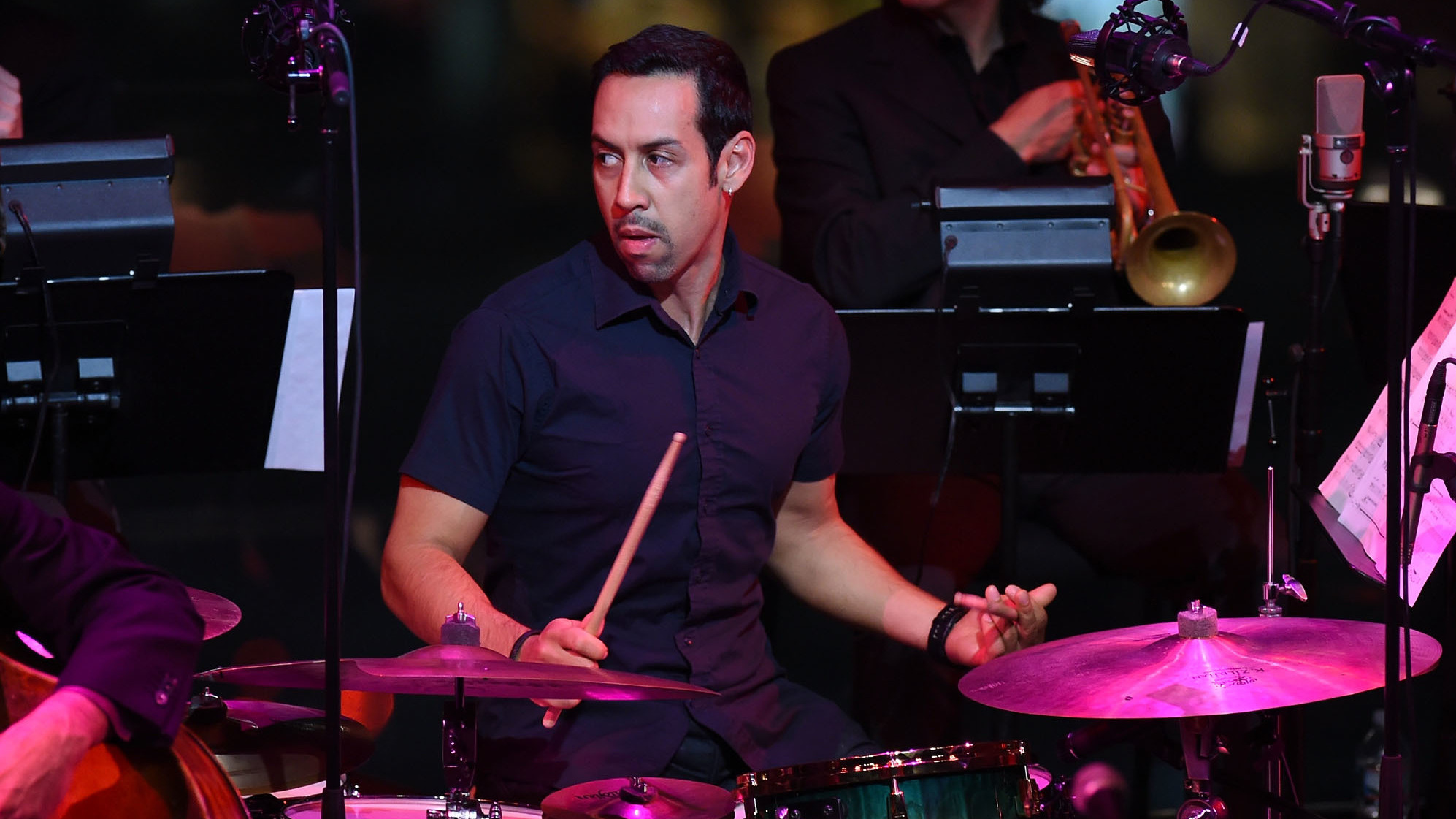
He studied classical piano and composition before becoming known as a jazz drummer and film scoring allows him to bring those wider musical influences into play. In fact, one episode of The Studio that featured heavier orchestration ended up receiving an Emmy nomination for its music. Sánchez was particularly proud of that because it highlighted a different side of his musical identity.
Learning to Speak the Language of Film
Writing music for film or television comes with a different creative process compared to writing your own albums. When composing personal music, Sánchez explained, the only real filter is himself. But when working in film, you suddenly find yourself collaborating with directors, producers, editors, and music supervisors. Sometimes all at once. That dynamic can be both rewarding and challenging.
One of the most interesting aspects he described is learning to translate feedback from people who are not musicians. For example, when a director asks for something “faster,” they might not actually mean increasing the tempo. They might simply want more subdivisions or a denser texture.
Even with those challenges, he finds the experience deeply satisfying. There is something special about composing music alone in a room and then, months later, hearing it come alive on screen as part of a finished story.
For a musician whose background is deeply rooted in improvisation, film scoring also taps into a familiar skill: reacting in real time.
In fact, when he first began working on Birdman, he sat with the director and improvised based purely on descriptions of the scenes. He responded to the emotional pacing of the story in much the same way a jazz musician responds to another soloist.
Always Searching for New Challenges
One theme that kept coming up during our conversation was Sánchez’s constant drive to explore new musical territory. Rather than repeating formulas that already work, he seems determined to keep pushing himself into unfamiliar territory.
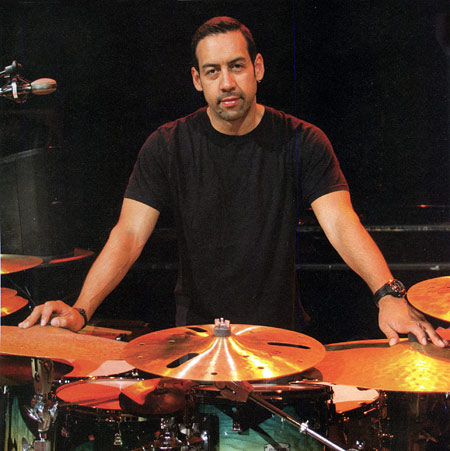
A great example is his project Beat Trio, which features an unusual lineup. Drums, Colombian harp, and banjo. The trio includes virtuoso banjo player Béla Fleck and harpist Edmar Castañeda.
Sánchez explained that at a certain stage in a musician’s career, it becomes harder and harder to find something genuinely new. Combining instruments that rarely appear together is one way of forcing a new creative challenge.
In this case, both the harp and banjo are incredibly rhythmic instruments with sharp attack and percussive qualities. That means the trio requires intense precision and interplay.
“Comfortable Being Uncomfortable”
One of my favourite moments in the conversation came when we discussed improvisation. Sánchez described jazz musicians as people who are “comfortable being uncomfortable.” In other words, they step into situations where the outcome is unknown and trust their experience and instincts to guide them in the moment.
That mindset extends into how he approaches the drums themselves. While some drummers meticulously compose their parts, Sánchez often prefers to let ideas unfold organically. However, he also acknowledges the value of structure. Repeating certain phrases or patterns if they serve the music.
For him, the ideal balance is having one leg in the known and one leg in the unknown.
Drummers vs. Musicians
Another subject Sánchez spoke passionately about was something he jokingly calls “drummer-itis.” It's the tendency for drummers to think purely in terms of technique, chops, patterns, and fills rather than thinking musically.
His advice to younger players is simple but powerful. Focus on storytelling.
Music, he explained, works much like language. Just as speech relies on phrases, punctuation, and pauses, music needs space, repetition, and connection between ideas.
Without that structure, even impressive playing can feel like a random stream of ideas. A great exercise he suggests is to play a short phrase, stop, and repeat it. Then vary it slightly. Play it softer, louder, or with a small rhythmic change. Those tiny developments begin to form a narrative. In other words, the drums become a voice rather than just an instrument.
Walking away from the interview, I was struck by how deeply Sánchez thinks about music as communication. Whether he is composing for film, improvising on stage, or collaborating with other musicians, everything ultimately comes back to the same idea. Telling a story. And hearing him talk about it only reinforced why his playing has resonated with me, and many others, for so long.
Thanks for reading! If you’d like to hear more from top-tier drummers, start a free 30-day Drum Dog trial and explore our full library of world-class lesson packs.


Still Stuck Behind the Kit?
If your doubles are sloppy, your grooves feel rigid, or your ghost notes get lost in the mix — it’s not your fault. You’ve been trying to fix the wrong things.
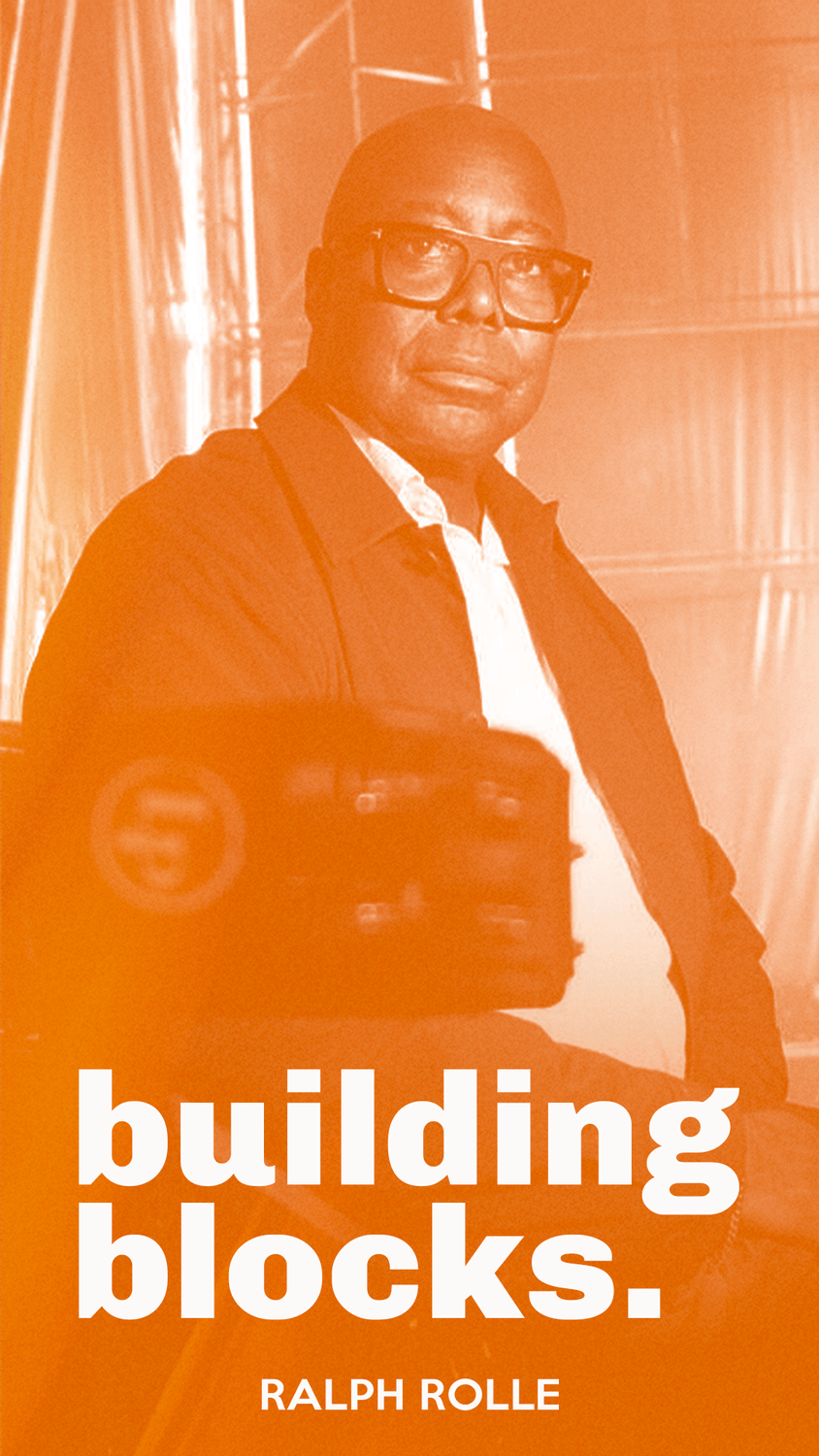
🎧 Ralph Rolle (drummer for Nile Rodgers & Chic) reveals the exact lessons most drummers skip… but every pro nails.
In just 8 crystal-clear videos, Ralph cuts through the fluff and gives you the breakthroughs YouTube never could.
Doubles that feel right
Grooves with flow
Ghost notes that hit
Bonus: Shuffle, hip-hop feel & clinic jam
Here’s the kicker:
You’ll feel better behind the kit — and your band will hear the difference. All for less than a pair of sticks.
“Turns out I wasn’t missing one trick. I was missing Ralph.” – @sticktwister

STAY IN THE LOOP