How to Practise Drums in an Apartment (Without Losing Your Edge - or Your Neighbours)
When I first moved to London, my bandmates couldn't get their heads round it. We'd finish our weekly rehearsal and someone would casually ask what I'd been working on that week - and I'd remind them, again, that the rehearsal was the only time I'd touched a kit since the last one.
They were genuinely surprised. Not just that I wasn't practising on a kit - but that I was still showing up sharp. To them, a week without your instrument meant a week of going backwards.
Here's the thing guitarists and keys players forget: their instrument fits in a gig bag and doesn't get the police called on it. Drummers don't have that luxury. If you live in a flat your kit is essentially a museum piece six days a week.
So the "how are you still sharp?" question had a boring answer: disciplined silent practice. Pad work with intent, not pad work as punishment.
Can you actually practise drums properly in a flat?
Yes, you can practise drums properly in a flat - and if you build the right framework around silent practice, you'll progress faster than most drummers with a full kit and a soundproofed garage.
That sentence is going to make a lot of bedroom-thrashers uncomfortable, so let me back it up. The drummers who plateau aren't the ones with limited access to a kit. They're the ones who treat practice as "playing along to stuff I already know" for an hour, four times a week. A kit doesn't make you a better drummer - focused work does.
Silent practice strips out everything that lets you fake it. You can't hide behind cymbal wash or kick volume on a practice pad. Every flam, every double, every weak finger shows up naked.
Why pad work feels like punishment (and why that's the whole problem)
Most drummers approach silent practice as a consolation prize. They sit down at the pad with the energy of someone doing chores, run through some half-remembered rudiments for twenty minutes, get bored, and call it a day. Then they wonder why pad work isn't doing anything for them.
The "real practice happens on the kit" myth
There's a stubborn belief among drummers that the kit is where the real work happens, and everything else is preparation. It's the wrong way round. The kit is where you demonstrate the work. The work itself - the slow, deliberate, finger-by-finger technique-building - can be done quietly.
What guitarists and keys players don't get about our instrument
Your guitarist mate can practise on the train. Your keys player has a weighted MIDI controller in their bedroom that's basically the real thing. They will, with the best intentions in the world, completely fail to understand what it's like to own an instrument you're allowed to play once a week without a noise complaint.
That's not their fault. But it does mean their advice on "just play more" is useless to you, and their surprise when you turn up sharp is a clue you're doing something they're not. You're being forced to be intentional. They've never had to.
What does silent drum practice actually look like?
This is where most "how to practise drums quietly" articles fall apart. They list ten exercises, tell you to do them, and leave you with no idea how it all fits together. Here's the framework I'd actually use, broken down by what you're trying to develop.
Hands: technique drills that transfer
Your hands are where silent practice pays the biggest dividend. Singles, doubles, paradiddles, flams, drags - all the standard rudiments - done slowly, at low stick height, with absolute attention to evenness.
The key word there is slowly. If you can't play a clean double-stroke roll at 60 bpm with both hands sounding identical, speeding it up doesn't fix anything. It just hides the problem under a faster tempo.
Ten minutes a day on rudiments at slow-to-medium tempos with a metronome will do more for your kit playing than an hour of bashing along to playlists. This drum rudiment breakdown is a great example of what you could include in your daily practice - worth a watch before you build your own routine.
Feet: building independence without a kick drum
Feet are trickier in a flat, because even a quiet pedal on a pad makes a thump that travels through floors. But you've got options.
A folded towel under a bass pedal pad cuts the impact noise dramatically. A small foot pad designed for silent practice is even better. And if you're in a top-floor flat with concrete underneath - congratulations, you can probably get away with a quiet pedal on a regular pad pretty late into the evening.
Time: the metronome work most drummers skip
Your timing is the single biggest thing separating you from working drummers, and you can sharpen it more in a flat than you ever could on a loud kit. On a kit, you can't really hear your own placement - the cymbals are too loud, the snare's too punchy, your ears compress everything. On a pad with a click in your headphones, you hear everything.
Work the click on the and of beats, on beats 2 and 4 only, on the e of every beat, with the click dropped out for whole bars at a time. This kind of work is where pros and amateurs separate, and it's almost always done quietly. There's a solid metronome practice guide on the Drum Dog channel that walks through several of these drills.
Musicality: playing along without playing loud
This is the bit most drummers don't realise they can do silently. Put a track on through headphones, sit at your pad, and play exactly what you'd play on the kit - kick patterns implied with quiet foot taps, hi-hat on the pad surface, snare on the same pad, fills articulated as if everything were there.
It feels weird for the first ten minutes. Then it clicks. You're rehearsing the decisions - the part of drumming most people never consciously practise.
How do you build a weekly routine that actually works?
A framework you can actually stick to beats a perfect schedule you'll abandon in a fortnight. Here's the shape of it.
The 80/20 split: silent days vs. kit days
Most flat-bound drummers get one or two loud sessions a week - a band rehearsal, a session at a rehearsal studio, maybe a Sunday afternoon at home if you've got understanding neighbours. That's your 20%. The other 80% is silent.
Don't try to fight that ratio. Make the silent days about building, and the kit days about deploying.
What to prioritise when you only get one loud session a week
When you do get to the kit, don't waste it on revision. You did your reps quietly all week. The kit session is for things you genuinely can't replicate silently: dynamic control, full-body coordination, ghost-note feel, ride cymbal patterns at full volume, fills that need real toms to hear properly.
Treat the kit like studio time. Walk in with a list. Walk out having ticked things off.
Tracking progress when you can't hear yourself improve
This is the silent-practice trap nobody warns you about: progress is invisible until it isn't. You won't notice it day to day. So you need an external check.
Record yourself, on the pad, once a week. Same drill, same tempo, same length. Do it for a month and play the recordings back to back. The improvement is always there. You just can't feel it in real time.
What if you don't have a kit at all?
If you're sitting there reading this with literally just a practice pad, a pair of sticks, and a dream - you're not behind. You're early.
Some of the sharpest drummers I know spent their first two or three years almost entirely on a pad. They didn't get behind. They got technical. When they finally did sit at a full kit regularly, they had foundations the kit-from-day-one drummers were still trying to build.
A pad, a metronome, headphones, and a structured plan is genuinely 80% of what you need to make real progress as a drummer. The kit fills in the other 20% when you have access to it. Don't let the absence of a kit stop you from starting.
Wrap-up
So here's the question the bandmates should've actually been asking me: not "how are you still sharp?" but "what are you doing on the pad that we're not doing on our instruments?"
The answer is intentional, deliberate, slow practice - the kind that's almost impossible to do on a loud kit with the adrenaline going. The flat doesn't take that away from you.
Pad work with intent, not pad work as punishment. Build the framework, trust it, and stop apologising for the fact that you live above someone.
Ready to make your silent days the reason you're the sharpest player in the room? Join Drum Dog - the masterclasses, drills, and structured tracks are built to help you.
Want to take silent practice from "good idea" to a system that actually delivers? Start a Drum Dog membership and turn your silent days into your sharpest ones.

Still Stuck Behind the Kit?
If your doubles are sloppy, your grooves feel rigid, or your ghost notes get lost in the mix — it’s not your fault. You’ve been trying to fix the wrong things.
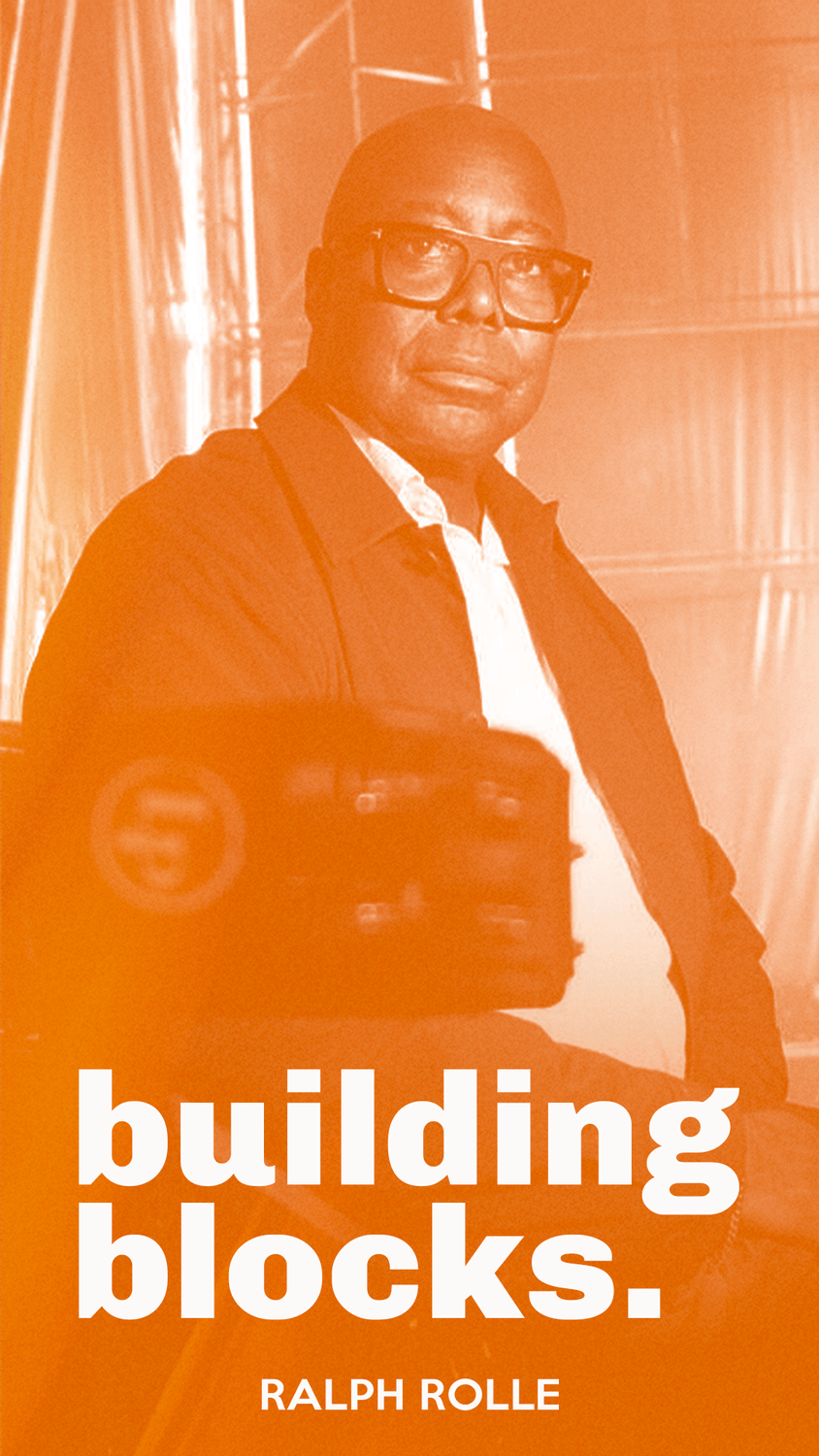
🎧 Ralph Rolle (drummer for Nile Rodgers & Chic) reveals the exact lessons most drummers skip… but every pro nails.
In just 8 crystal-clear videos, Ralph cuts through the fluff and gives you the breakthroughs YouTube never could.
Doubles that feel right
Grooves with flow
Ghost notes that hit
Bonus: Shuffle, hip-hop feel & clinic jam
Here’s the kicker:
You’ll feel better behind the kit — and your band will hear the difference. All for less than a pair of sticks.
“Turns out I wasn’t missing one trick. I was missing Ralph.” – @sticktwister

STAY IN THE LOOP